
Project:
Collection of Common Places
Location:
Santiago de Compostela, La Coruña, Spain
Architectural program:
Public architecture
Date of completion:
2020
ROMANA
The project aims to recover the urban layout of the existing path Rúa de Caramoniña by incorporating various elements along its course that attract users and invite them to engage with it. These elements are independent yet function together, each with different objectives and identities, forming part of a common strategy despite their physical disconnection. They work programmatically, economically, and culturally in unison.
Thus, the path is understood as a process without a clear beginning or end, but rather as part of the whole that is the Historic Center of Santiago. By creating a simple configuration of objects—such as squares, landmarks, streets, and crossings—complexity can emerge. These elements are part of the same narrative, akin to a film with various characters or an orchestra that may lack coherence individually but reveals something profound when well-directed.
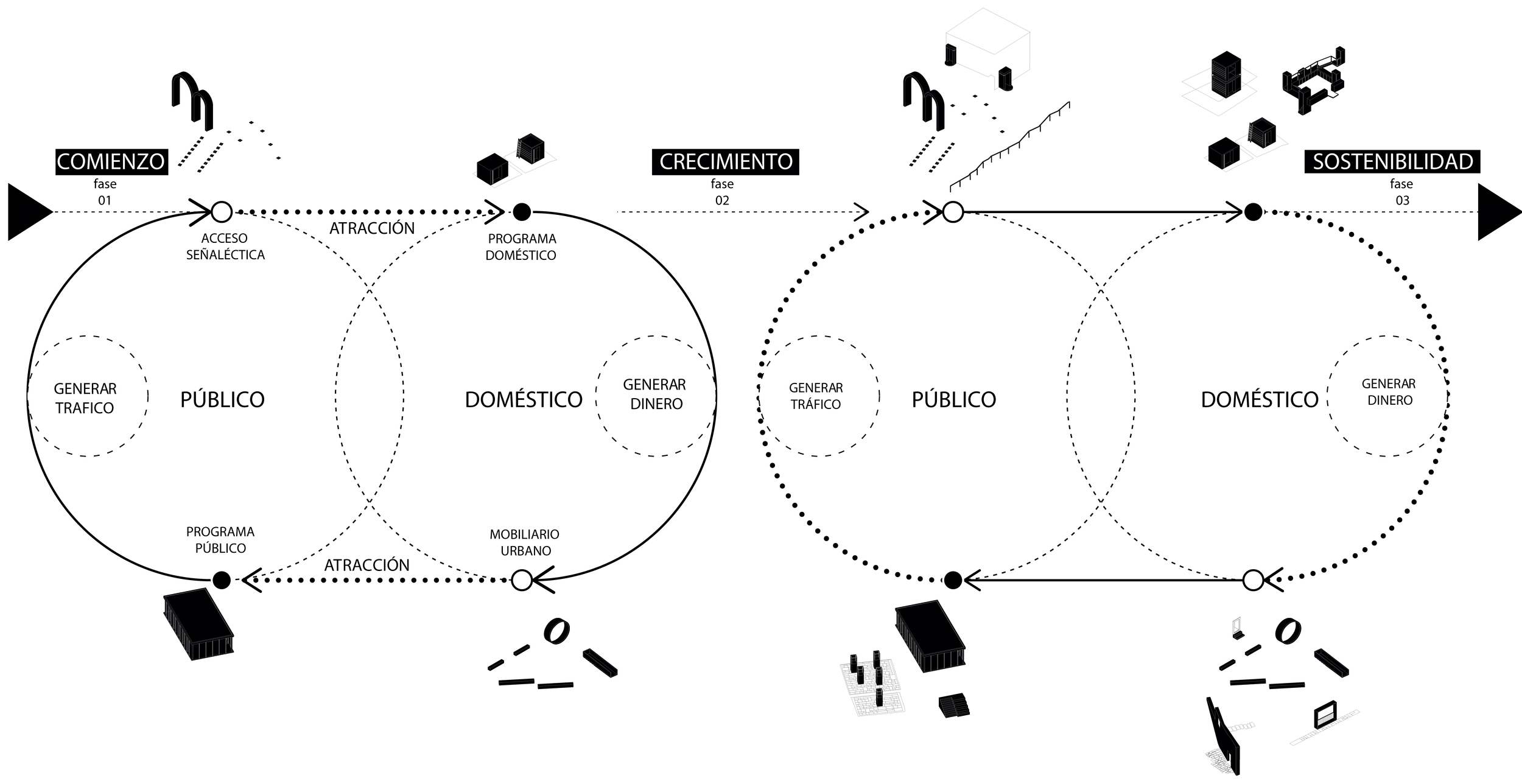
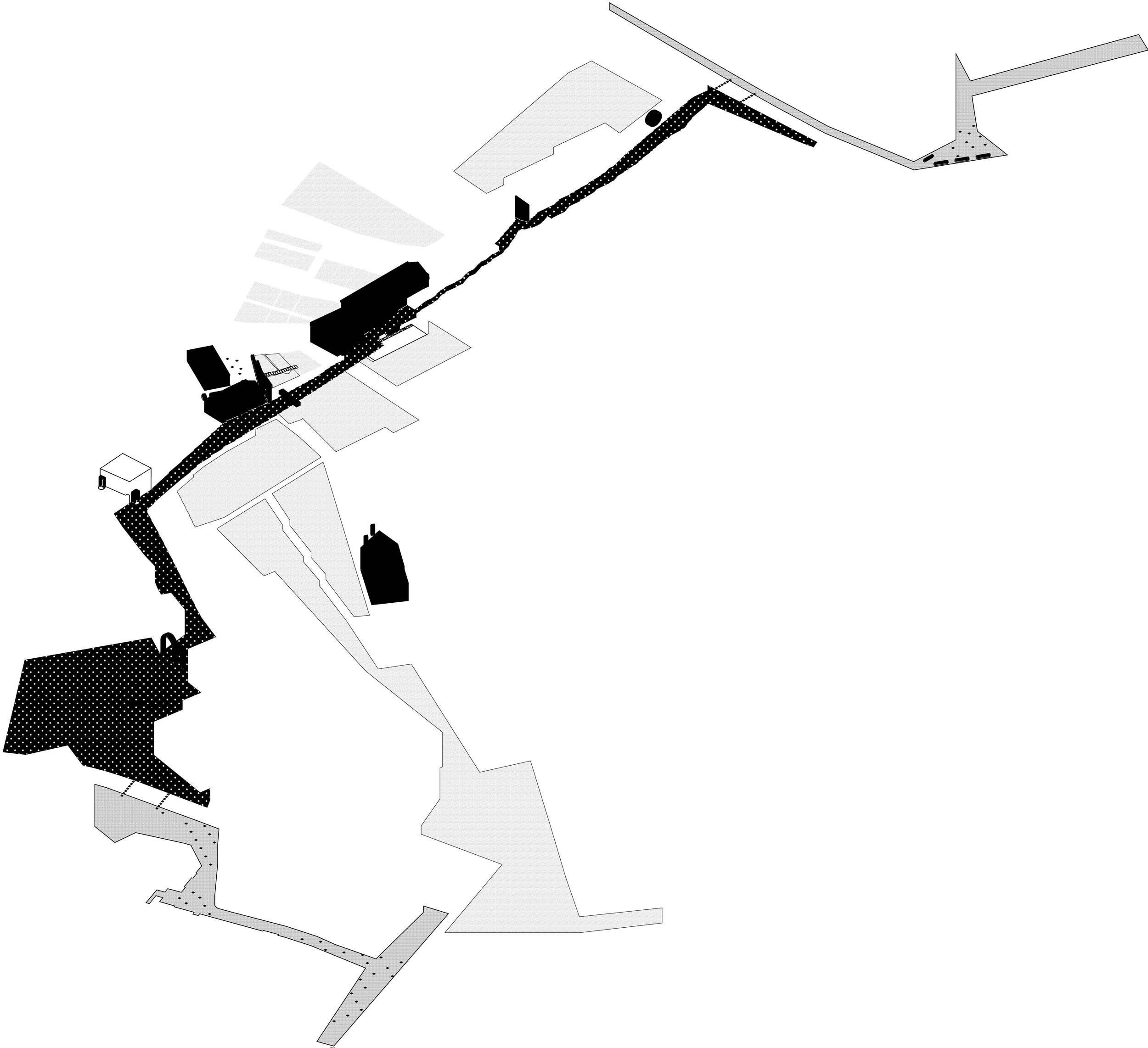
These elements frame views along the path, generate passages between walls and thresholds, define crossings, and blend with existing features. They highlight what is latent in the area and complement it, creating "subtle connections," reminiscent of an English garden; you can see it but not access it.
The intention is for users to discover the site as they traverse the path, with each user experiencing it differently.
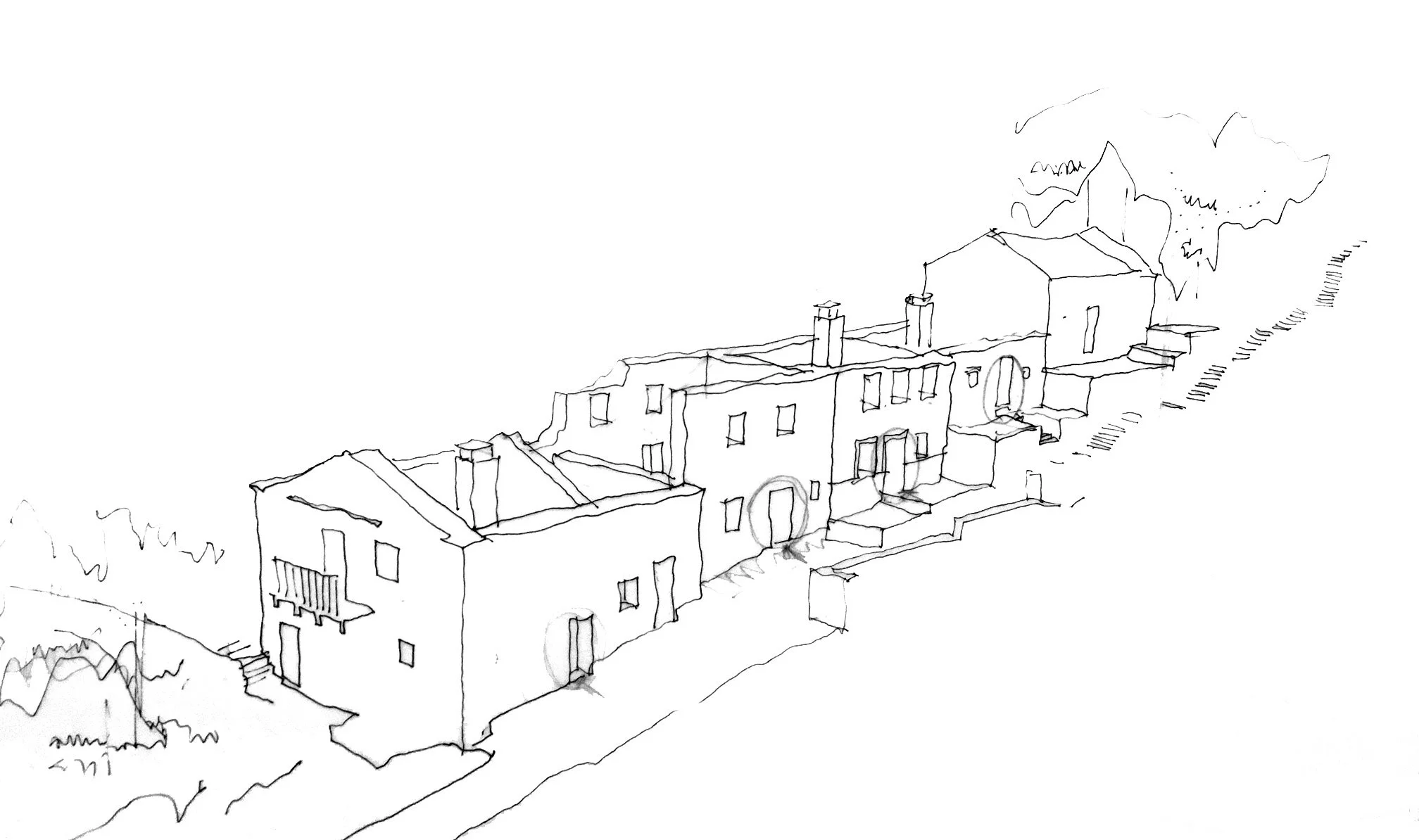
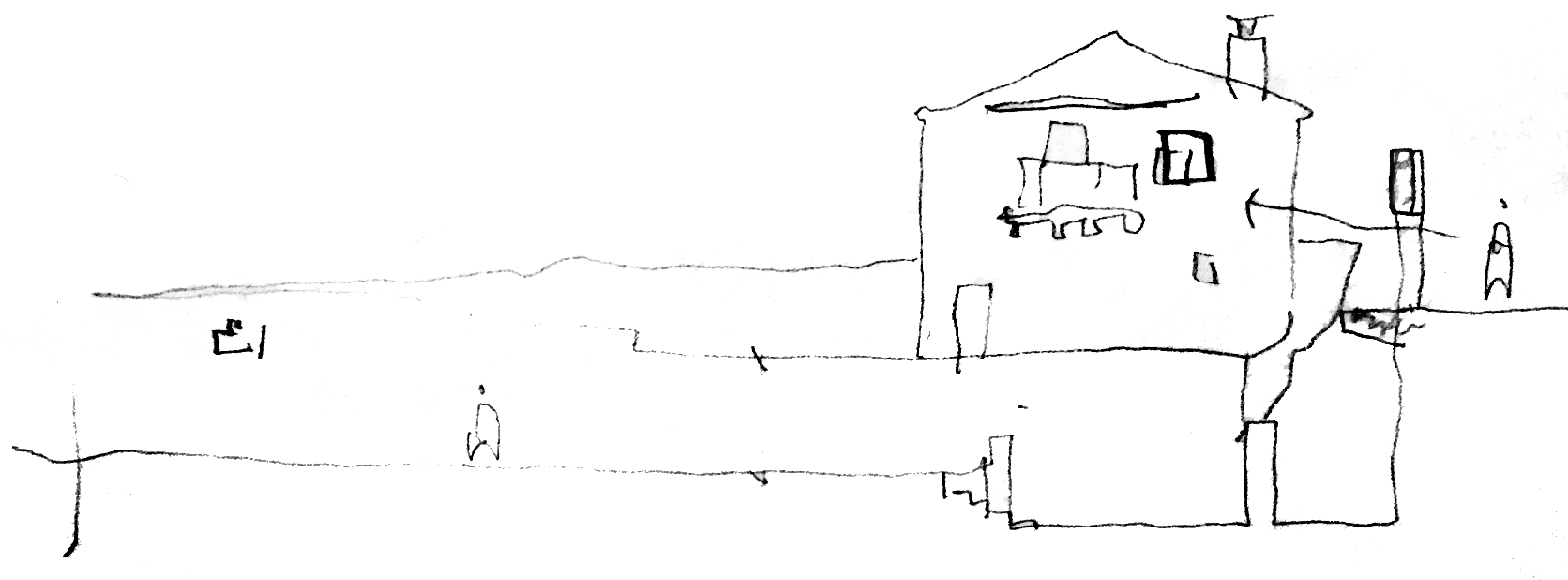
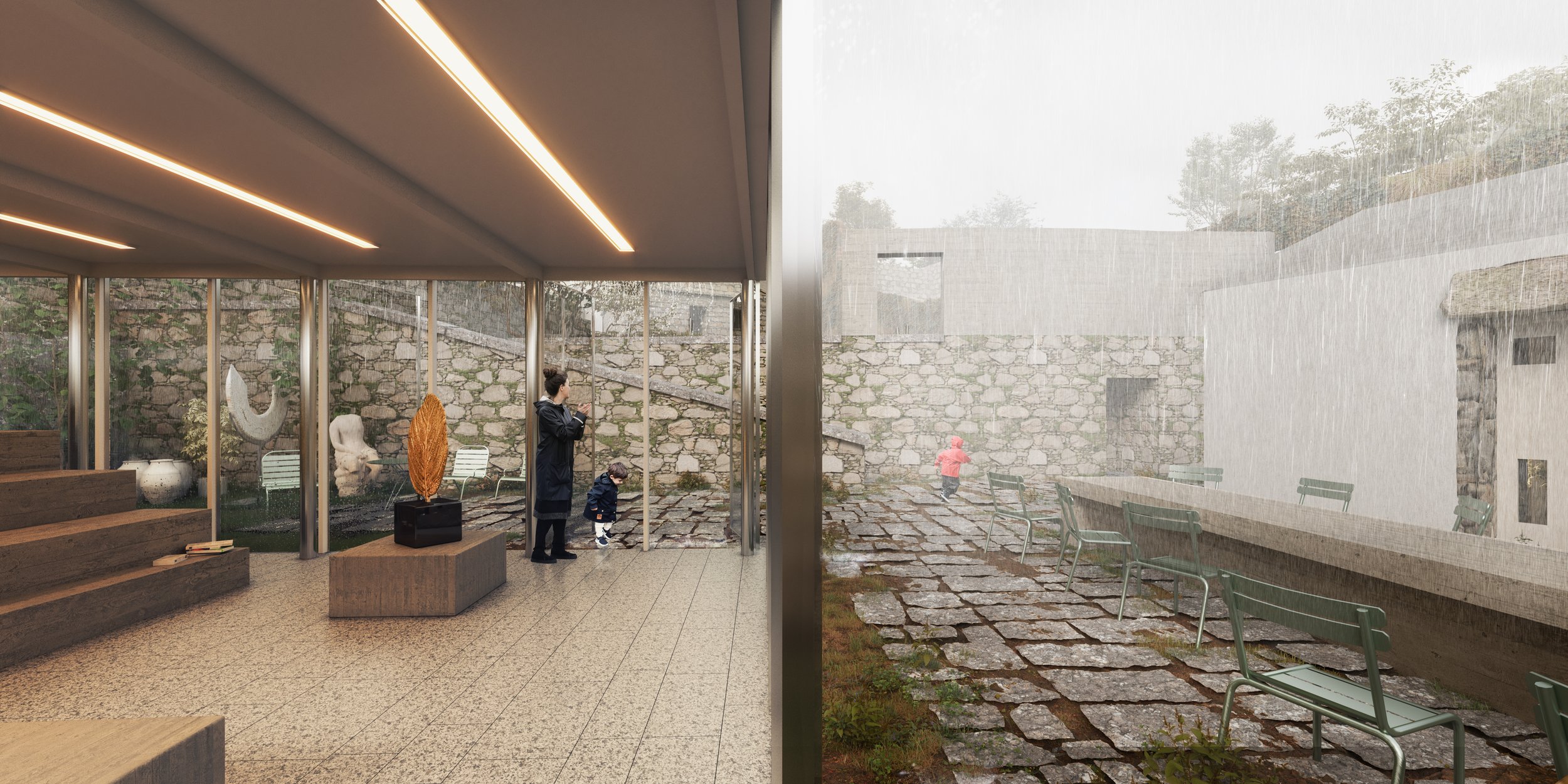
The proposal consolidates the Caramoniña path by situating all housing programs within the ruins of five existing houses, generating five new "habitable units" with private and communal spaces. In the area designated for housing within the gardens, a multi-use space is proposed—a public and permeable plaza that activates the interior route within the gardens while reconnecting it to existing terrace gardens. Near the museums, an exhibition-workspace is planned to connect residents of the complex with local city users.
The goal is to enhance urban reading of the area as a whole through small interventions that improve accessibility, lighting, and drainage along the path, proposing urban acupuncture operations throughout to attract people at its intersection with the urban fabric.
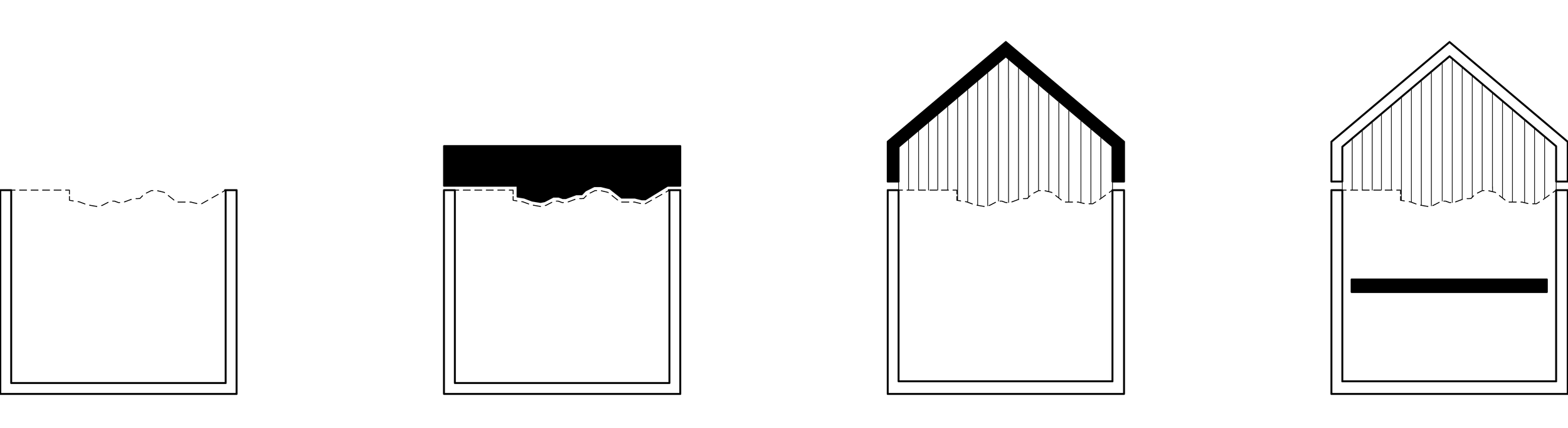
Each dwelling is articulated around a central core that contains all the functional spaces of a residential unit: bed, storage, full bathroom, and shelving. This formula allows us to free up the rest of the dwelling, creating a space of uncertainty that can be appropriated by the user. Furthermore, this core does not reach the roof slab, but ends before it, allowing the creation of a private reflection space for each user on the upper floors.